


Holiday Rental Management for Tenerife Owners
- September 22, 2026
- Holiday
Holiday rental management in Tenerife combines polished presentation, responsive guest care, and smart pricing to protect your home and improve stays. Read More
 by jadesuites.es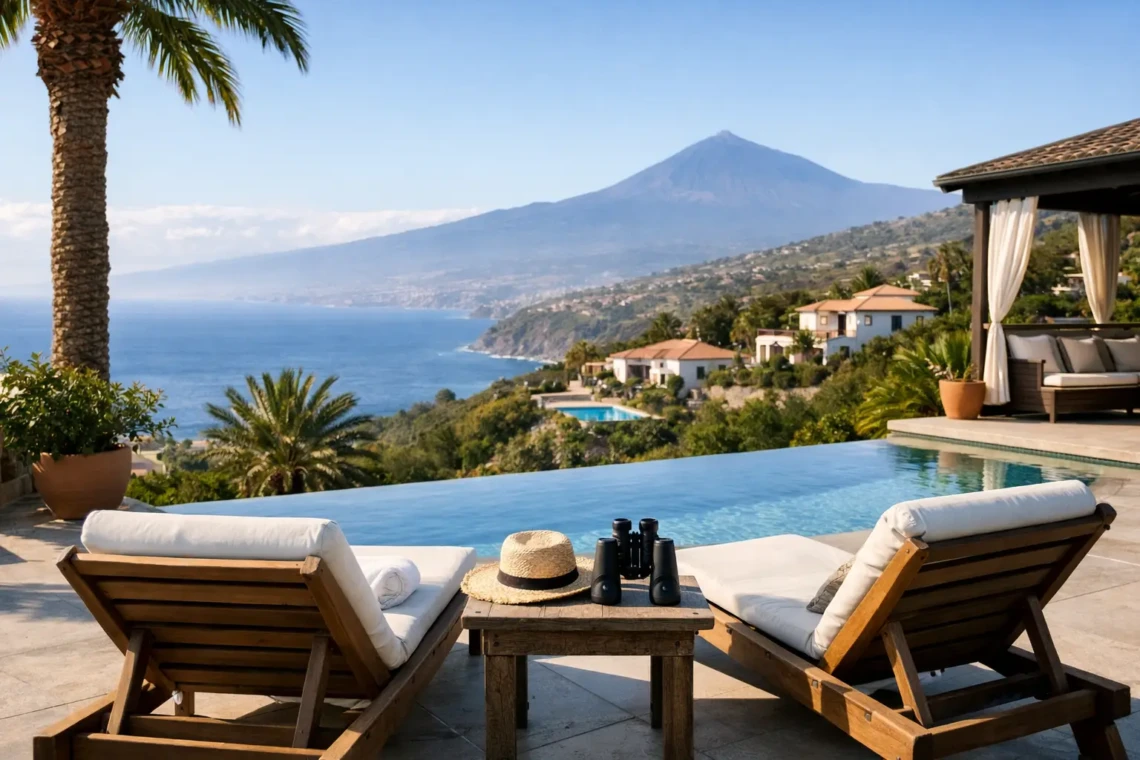
A quiet Tenerife stay is less about finding the island’s most remote address and more about choosing the right rhythm. A beautiful apartment can still sit above a lively promenade, while a home a few minutes inland may offer birdsong, ocean views, and deeply restful nights. If you are wondering how to find quiet Tenerife accommodation, begin by looking beyond the pool photos and asking where the property sits within its neighborhood.
For couples seeking a slower escape, families who value peaceful evenings, or remote workers who need clear thinking as much as reliable Wi-Fi, northern Tenerife often provides the balance that busier resort areas cannot. The key is matching the location, property type, and travel dates to the kind of quiet you actually want.
Tenerife has many personalities. The south is known for dependable sunshine, beaches, and active resort life. It can be a wonderful choice for travelers who want restaurants, entertainment, and everything close at hand, but it is not always the natural answer for a peaceful retreat.
The north feels greener, more residential, and more connected to local island life. Areas around Puerto de la Cruz, Santa Ursula, Tacoronte, and Los Realejos offer a more relaxed setting, often with dramatic Atlantic views, traditional towns, gardens, and access to walking routes. You may hear church bells, distant waves, or neighborhood life rather than late-night music and busy holiday traffic.
That does not mean every northern address is silent. Puerto de la Cruz has lively streets, festivals, restaurants, and a popular seafront. The difference is that quiet pockets are easier to find when you look just outside the central promenade and busiest dining areas. Santa Ursula and parts of Los Realejos can be especially appealing for guests who want privacy while remaining within easy reach of shops, beaches, and day trips.
A hillside home often brings more peace and wider views, though there is a trade-off. You may need a rental car, and the roads can be steeper and more winding than in a flat resort town. For many guests, that small extra effort is what creates the sense of escape.
A property description may use words such as tranquil, secluded, or peaceful. Those can be useful clues, but the map usually tells the fuller story. Before booking, look at what is immediately around the home.
A stay near a major road, a beachfront promenade, a large hotel complex, a nightclub district, or a stadium may be convenient but can bring traffic, delivery vehicles, holiday crowds, and evening noise. On the other hand, a residential side street, a hillside neighborhood, or a property set back from the coast can feel very different, even when it is only a short drive away.
Pay attention to the property’s position within the building as well. A ground-floor apartment facing a communal pool may suit a family that enjoys a social atmosphere. A top-floor apartment, a detached bungalow, or a villa with a private outdoor area is often a stronger choice for guests who value calm and personal space.
Satellite images can also help set expectations. Look for nearby parking lots, restaurants with large terraces, construction sites, schoolyards, or open land. None of these automatically rule out a property, but they help you ask better questions before committing.
Quiet is personal. Some travelers want no nightlife outside the window. Others want a peaceful home where they can still walk to coffee, dinner, and the sea. A remote worker may be comfortable with daytime neighborhood sounds but need a bedroom away from traffic for early calls. Families may prefer an enclosed terrace and bedrooms that are not directly beside a pool area.
Be specific about your priorities. Consider whether you are most sensitive to road noise, neighboring guests, barking dogs, early-morning deliveries, or occasional local celebrations. Tenerife is a lived-in island, not a staged resort, and local character can include everyday sounds. The goal is not artificial silence. It is a setting that lets you rest well and enjoy your time without unwanted disruption.
The home itself matters as much as the destination. Hotels can offer excellent service, but shared corridors, entertainment programs, buffet hours, and large pool areas naturally create more movement. An exclusive apartment, bungalow, house, or villa can offer more control over your surroundings.
Look closely at the practical details. Double-glazed windows, air conditioning or ceiling fans, blackout curtains, and bedrooms positioned away from the street all make a difference. A private terrace or garden gives you space to read, work, or dine outdoors without competing for a lounger. For longer stays, a proper kitchen, laundry facilities, and a comfortable living area prevent the home from feeling like a place you simply sleep between outings.
For remote-friendly travel, do not treat Wi-Fi as an afterthought. Ask whether the connection is suitable for video calls and whether there is a dedicated desk or table with an ergonomic chair. A quiet home becomes much more valuable when it also supports a productive workday. Longer-stay guests can often enjoy a more settled experience outside peak turnover periods, with time to develop a favorite bakery, walking route, and sunset viewpoint.
At JadeSuites, the emphasis on carefully prepared homes and attentive local support is designed for this kind of stay: comfort that feels considered, not generic.
Guest reviews can reveal details that listing photos cannot. Search for repeated comments about sleep quality, road access, neighborhood atmosphere, parking, construction, or communication with the host. A single complaint may reflect an unusual circumstance. Several mentions of the same issue deserve attention.
The most reassuring reviews are often specific: guests mention peaceful mornings on the terrace, comfortable beds, a calm residential setting, or quick help when they had a question. Also look for recent reviews. Neighborhoods and buildings change, and current feedback is more useful than a glowing comment from several years ago.
Be realistic when reading. A centrally located property may receive excellent reviews from guests who loved being near restaurants, even if it is not ideal for someone seeking early nights. Ratings matter, but the written experience should sound like the experience you want.
A thoughtful host should welcome clear questions, especially when quiet is central to your trip. Ask whether the bedrooms face a street, pool, bar, or neighboring building; whether there is current construction nearby; and whether the area becomes busy on weekends or during local holidays.
It is also worth asking about parking and access. A home may be wonderfully peaceful but difficult to reach after dark without a car. If you are working remotely, confirm the internet speed, desk setup, and mobile signal. If you are traveling with a baby or light sleeper, ask whether the property has shutters, blackout blinds, or any known external noise.
The quality of the response is useful information in itself. A professional host will not promise perfect silence where it cannot be guaranteed. Instead, they should explain the setting honestly and help you decide whether the home suits your expectations.
The same Tenerife location can feel very different in February, August, or during a major local celebration. School holidays and peak winter sun season bring more visitors, especially in resort centers. Summer can be livelier in coastal areas popular with Spanish residents, while weekends often bring more local dining and beach activity.
Carnival season deserves special consideration. Tenerife’s celebrations are colorful, joyful, and worth experiencing for many visitors, particularly in and around Santa Cruz and Puerto de la Cruz. But guests seeking early nights should check local event dates and choose their base accordingly. Likewise, a home near a village plaza may be peaceful for most of the year yet become lively during a patron-saint festival.
For a quieter feel, consider a midweek arrival, a longer stay outside the busiest holiday windows, and a home slightly removed from the main tourist center. You can still visit the island’s livelier places when you want to, then return to a private space at the end of the day.
The quietest address is not always the best one. If reaching dinner, groceries, or the coast requires a difficult drive every day, the isolation may begin to feel inconvenient rather than restorative. The most successful stays usually offer a middle ground: a peaceful residential base, practical amenities nearby, and easy access to the experiences that brought you to Tenerife.
Choose a home where you can picture your real routine, not just your arrival-day view. Morning coffee on a terrace, a focused afternoon of work, an unhurried dinner, and a good night’s sleep are often the details that turn a Tenerife vacation into a genuine retreat.



Holiday rental management in Tenerife combines... Read More

Wondering when is Tenerife surfing season?... Read More

Learn how to prepare villa for... Read More

Join The Discussion